 Save
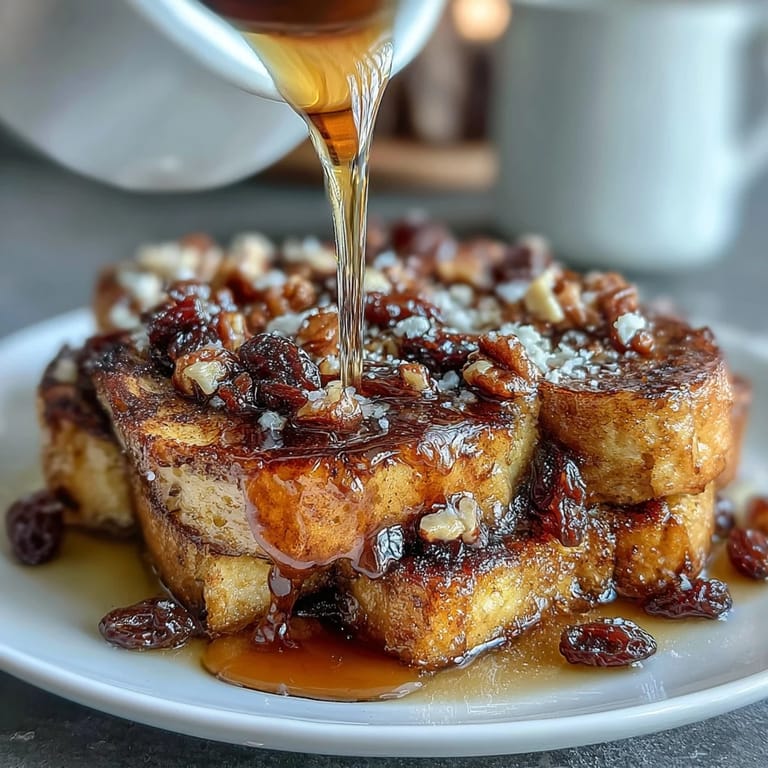
Save The first time I made capirotada, the scent of cinnamon and sugar drifted into the hallway, drawing my neighbor to knock and ask, "What on earth are you baking?" I hadn't planned to share, but that unexpected compliment nudged me to set an extra plate on the table. There's something comforting about the gentle simmer of piloncillo syrup and the anticipation as the bread turns golden in the oven. Even now, making this dessert feels like a quiet celebration, no matter the season. The kitchen always smells just a little sweeter when the baking dish is full of toasted bread and melty cheese.
One Lent afternoon, I assembled capirotada with my friend Ana, laughing as we argued over raisins versus cranberries. Our hands ended up sticky from syrup, and she insisted the cheese needed an extra sprinkle for luck. Baking together that day made me realize how fun dessert prep can be when paired with good conversation, even if you both sneak tastes before it cools.
Ingredients
- Day-old bread (bolillo, French bread, or baguette): Drying the bread before layering is essential—stale slices soak up syrup beautifully without turning soggy.
- Piloncillo (or packed dark brown sugar): The earthy sweetness gives capirotada its signature depth; chopping makes it melt faster into the syrup.
- Cinnamon sticks: A few sticks infuse the syrup with warm fragrance—don't substitute ground cinnamon, which can cloud the mixture.
- Raisins: They plump up after baking, lending juicy surprises to every bite.
- Mild cheese (queso fresco, Monterey Jack, or mozzarella): The cheese melts into the bread, binding flavors and adding creamy texture; grate it for effortless layering.
- Butter (for greasing, plus one tablespoon): Butter slicks the crumbs and balances the syrup with creamy notes.
- Pecans or peanuts (optional): Nuts contribute crunch and make each forkful more satisfying; toast them for extra richness.
- Whole cloves: Cloves bring gentle spice—remove them after simmering to avoid bitter bites.
- Water: Helps dissolve the piloncillo, forming a glossy, fragrant syrup.
Tired of Takeout? 🥡
Get 10 meals you can make faster than delivery arrives. Seriously.
One email. No spam. Unsubscribe anytime.
Instructions
- Prep the Bread:
- Slice your day-old loaf into thick rounds; toast them until the crust shatters slightly and the kitchen fills with a roasty aroma.
- Simmer the Syrup:
- Combine piloncillo, cinnamon sticks, cloves, and water in a saucepan, stirring as the sugar dissolves and dark bubbles rise—this step is all about patience and savoring the scent.
- Butter the Dish:
- Lightly coat the baking dish, making sure no corner is missed, so nothing sticks and cleanup is a breeze.
- Layer Like a Pro:
- Build with half the bread first, followed by generous handfuls of raisins, cheese, and nuts, then pour over syrup; press gently so every bit soaks up flavor.
- Second Stack:
- Repeat those layers, finishing with remaining bread and fillings, then drizzle the last of the syrup and pat everything down to ensure even soaking.
- Cover and Bake:
- Tent with foil—this traps steam and melts the cheese so the dessert turns velvety within; after twenty minutes, peel back the foil for a final golden finish.
- Cool and Serve:
- Let the capirotada rest for ten minutes; the bread absorbs syrup and the cheese settles, making each spoonful warm and inviting.
 Save
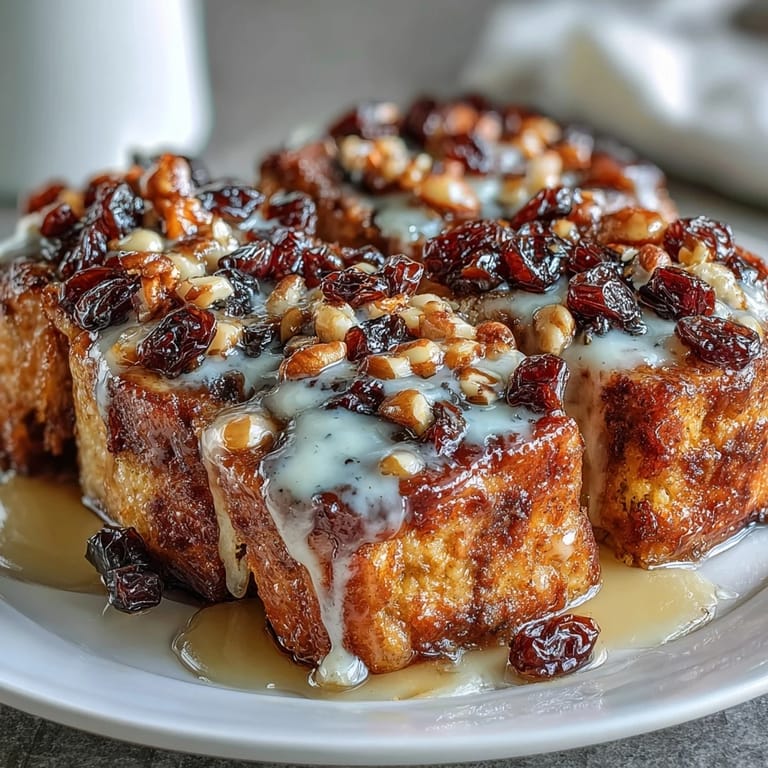
Save The last time I baked capirotada, my nephew asked if he could sprinkle the cheese, and ended up improvising a cheesy smiley face across the top. That silly detail made serving dessert feel more joyful than ever, reminding me food can turn into art with just a little imagination.
How to Toast Bread Without Drying It Out
If you toast the bread too long, it becomes hard as a rock—just until lightly crisped and golden is best. Leave the oven door cracked open a touch to let moisture escape and watch for color changes, since every loaf is a bit different.
Swapping the Fillings for Fun Twists
Don't hesitate to blend cranberries, dried apricots, or use salty Cotija cheese in place of the classics. It's the layering and syrup that truly unify the dessert; even unlikely combos can end up delicious if you trust your taste buds.
Getting the Syrup Just Right
Simmering syrup is simple, but watch for a glossy sheen—it means the sugar has dissolved and flavors have melded. A little butter stirred in at the end provides silkiness and helps the bread soak up the sweetness perfectly.
- Add condensed milk to the syrup for a creamier finish.
- Chopped nuts give texture but are entirely optional.
- Never skip removing cloves and cinnamon sticks—they overpower if left in.
 Save
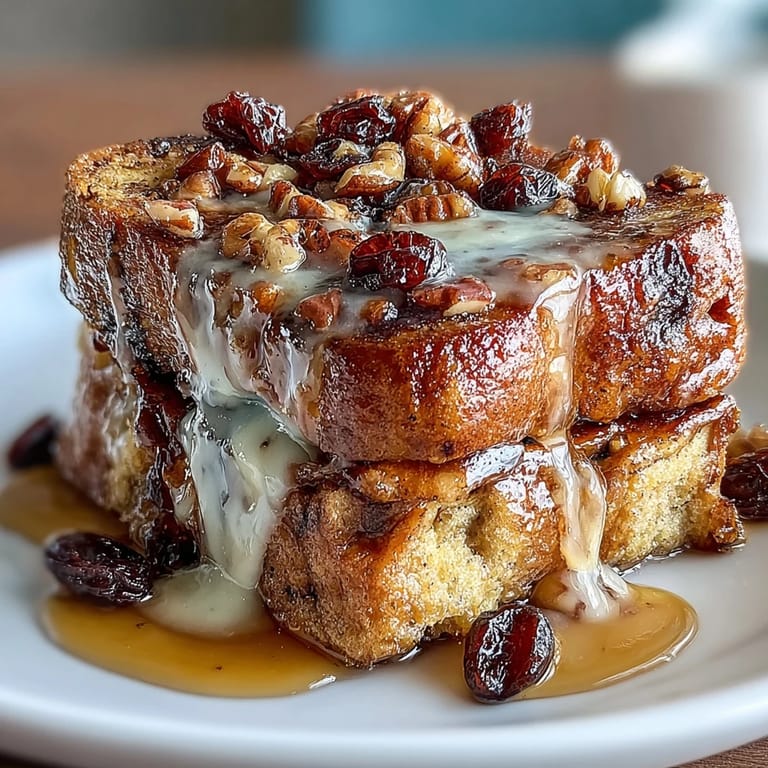
Save If you find yourself with leftovers, capirotada tastes even better the next day. Sharing a square from the pan is a simple way to brighten someone's afternoon.
Recipe FAQs
- → What type of bread works best?
Day-old bolillo, French bread, or baguette holds up well and absorbs the syrup without getting mushy.
- → Can I substitute piloncillo?
Packed dark brown sugar offers a similar deep caramel flavor if piloncillo isn't available.
- → Is the cheese necessary?
Cheese adds creaminess and a salty balance, but the dessert can be made without it if preferred.
- → Can I add nuts or other dried fruit?
Pecans, peanuts, cranberries, or apricots make delicious variations, adding texture and flavor.
- → How do I adapt for gluten-free diets?
Use gluten-free bread and check that other ingredients meet your dietary needs.
- → What's the best way to serve?
Serve warm or at room temperature, paired with Mexican hot chocolate or freshly brewed coffee.