 Save
Save My grandmother's kitchen smelled like hot oil and sage butter the day she taught me that chicken fried steak wasn't really about the chicken at all. I was twelve, standing on a stepstool to reach the counter, watching her pound those cube steaks with the flat side of a meat mallet like she was having a conversation with them. She'd say, "You've got to wake them up," and I didn't understand then that tenderness came from a little violence and a lot of respect. That lesson stuck with me through decades of cooking, and now when I make this dish, I'm not just frying steak—I'm honoring that moment.
I made this for my college roommate Sarah on a random Thursday night when she was stressed about exams, and something shifted in our kitchen that evening. She sat at our tiny table, fork in hand, tears streaming down her face, and I realized food wasn't just filling a stomach—it was saying without words that she mattered. She still calls me when life gets overwhelming and asks if I'm making that steak, and I always do.
Ingredients
- Beef cube steaks (4, about 150–180 g each): These are already tenderized by the butcher, which is the secret weapon of this dish—they cook fast and turn impossibly soft, not tough like you might fear.
- All-purpose flour (1 cup / 125 g): This creates the structural foundation for your crust; don't skip the seasoning step or you'll have bland breading.
- Large eggs (2) and whole milk (1 cup / 240 ml): Together, they form an egg wash that's thick enough to hold the breadcrumb coating without slipping off into the oil.
- Breadcrumbs (1 cup / 60 g): Use panko if you want extra crunch, but regular breadcrumbs give you a more delicate, refined crust that actually feels Southern.
- Garlic powder, onion powder, paprika, cayenne (1 tsp, 1 tsp, 1 tsp, 1/2 tsp): These seasonings live in the flour coating, so every bite tastes intentional—taste as you go and adjust the cayenne to your heat tolerance.
- Salt and black pepper (1 tsp and 1/2 tsp): Salt goes in both the flour and the finished gravy; this dual-seasoning approach prevents the flat, under-salted taste that ruins good food.
- Vegetable oil (for frying): You need enough to come up 1 cm on the sides of the skillet; shallow frying keeps the oil temperature stable and your steaks golden rather than greasy.
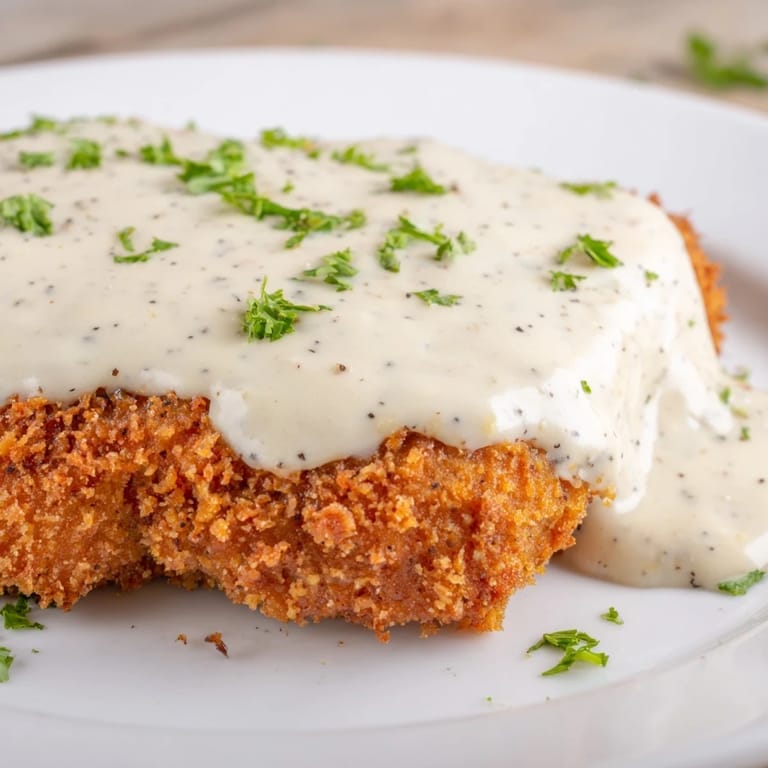
- Pan drippings or unsalted butter (3 tbsp), flour (3 tbsp), whole milk (2 cups / 480 ml): The gravy is where the magic lives—pan drippings carry all the browned, caramelized flavor from frying, so scrape that skillet clean.
- Fresh parsley (2 tbsp, chopped, optional): It's optional, but that flash of green against golden-brown steak feels like a reminder that even comfort food can be beautiful.
Tired of Takeout? 🥡
Get 10 meals you can make faster than delivery arrives. Seriously.
One email. No spam. Unsubscribe anytime.
Instructions
- Pat your steaks completely dry:
- Moisture is the enemy of a crispy crust, so use paper towels and don't rush this step. Wet steak will steam instead of fry, and you'll end up with soggy breading instead of that golden shatter.
- Build your breading station:
- Three bowls in a row: seasoned flour on the left, egg wash in the middle, breadcrumbs on the right. This setup matters because it keeps you moving smoothly and prevents one-handed confusion in the middle of cooking.
- Coat each steak with intention:
- Flour first, shaking off excess. Then into the egg wash—let it drip for a second so it coats evenly. Finally, press into the breadcrumbs and gently pat so they adhere instead of flake off. You'll feel the difference between a rushed coating and one that's been handled with care.
- Heat your oil until it shimmers and dances:
- Medium-high heat is your target, and you'll know it's ready when you hold your hand 15 cm above the skillet and feel real heat rising. Too cool and your steaks absorb oil instead of crisping; too hot and the outside burns before the inside finishes.
- Fry each steak for 3–4 minutes per side:
- Watch for that deep golden-brown color, not pale and not dark brown. The sound changes too—it starts loud and sizzling, then calms into a gentle crackle when the coating is set and the steak is cooking through.
- Transfer to paper towels and keep warm:
- A warm plate in a low oven works, or rest them loosely tented with foil so steam doesn't soften that crust you just worked for.
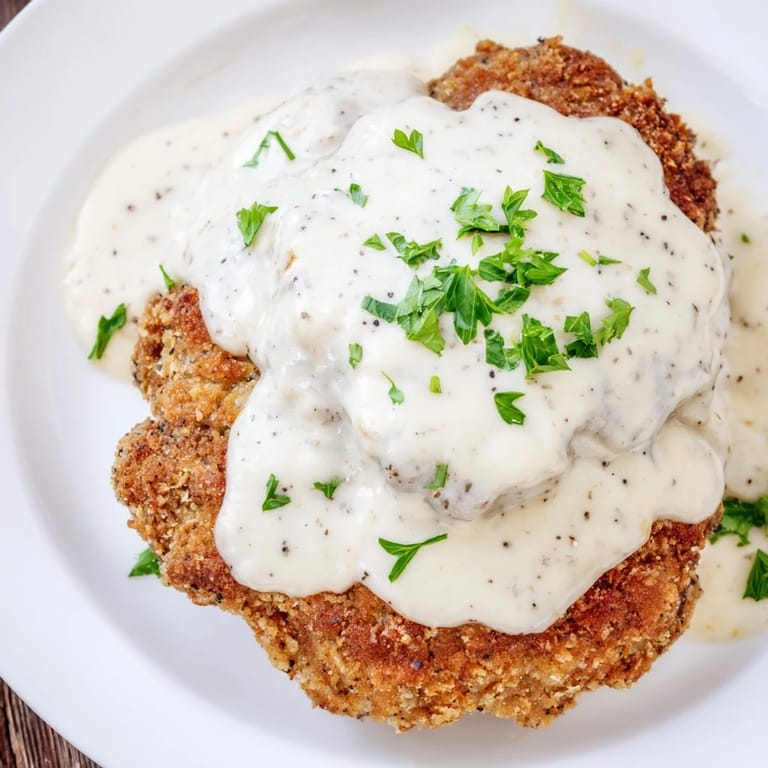
- Build your gravy from the browned bits:
- This is non-negotiable: keep 3 tablespoons of that golden oil in the skillet and whisk the flour into it for a minute. You're cooking out the raw flour taste and creating a roux that will thicken the milk into silk.
- Add milk slowly, whisking constantly:
- This prevents lumps and ensures a smooth, luscious gravy. Keep whisking over medium heat for 3–5 minutes until it reaches that perfect coat-the-back-of-a-spoon thickness.
- Season the gravy at the end:
- Taste it first—you may need less salt than you think if your pan drippings are flavorful. A crack of fresh black pepper finishes it.
 Save
Save I learned the real meaning of this dish one winter when my neighbor lost his job and sat at my kitchen table looking hollow. I made him a plate without asking, and watching him eat quietly, fork moving slowly, something in his shoulders softened. Comfort food is called that for a reason—it meets you where you are and says that someone noticed you needed warmth.
Why This Dish Never Goes Out of Style
Chicken fried steak survived generations not because it's fancy or trendy, but because it works. A modest cut of beef becomes something noble through technique and care. The breading holds the heat and creates texture, the gravy turns everything rich and cohesive, and the whole thing comes together in less time than it takes to order takeout. It's unpretentious cooking that refuses to apologize for itself.
The Science of the Crust
The three-stage coating—flour, egg, breadcrumbs—isn't random. The flour helps the egg stick to the meat. The egg binds the breadcrumbs to the flour and seals in moisture. When that hits hot oil, the outer layer sets into a crispy shield while the inside stays tender and juicy. I think of it like building a flavor fortress, one layer at a time.
Serving and Storage Wisdom
Serve this hot, with mashed potatoes or steamed green beans beside it—nothing needs to be complicated when the main dish is this good. Leftovers reheat beautifully in a 180°C oven for about 10 minutes, and cold leftover steak makes an unexpected, excellent sandwich the next day with mayo and tomato on white bread.
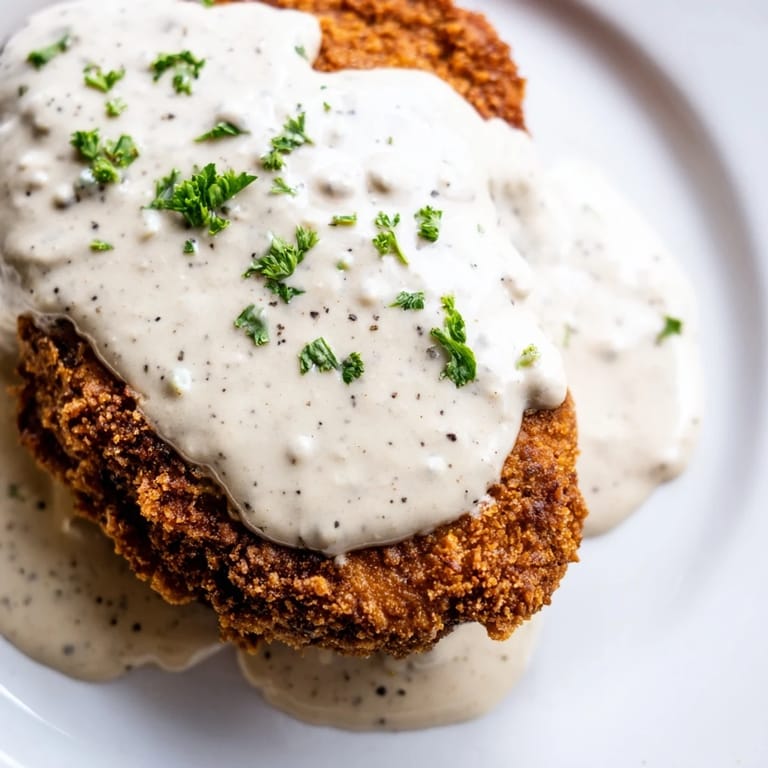
- Make the gravy in the same skillet you fried in, not separately—every browned bit matters and belongs in that sauce.
- If you want to prep ahead, set up your breading station and pat your steaks dry a few hours before cooking, then cover and refrigerate.
- Smoked paprika in the gravy adds a subtle depth that makes people ask what your secret ingredient is.
 Save
Save This is the kind of food that sticks with people, not because it's complicated but because it tastes like someone took time to make something good for them. Make it when you want to say that without words.
Recipe FAQs
- → How do I tenderize the steak for best results?
Use cube steaks as they are pre-tenderized, ensuring a tender and juicy texture after frying.
- → What spices enhance the breading flavor?
Garlic powder, onion powder, paprika, and a pinch of cayenne pepper add warmth and depth to the seasoned flour coating.
- → How is the creamy white gravy made?
Use pan drippings or butter with flour to form a roux, then gradually whisk in milk until thickened, seasoning with salt and pepper.
- → What oil is best for frying?
Vegetable oil is recommended for its high smoke point and neutral flavor.
- → Can the dish be adapted for dietary restrictions?
To make it gluten-free, substitute all-purpose flour and breadcrumbs with gluten-free alternatives.