 Save
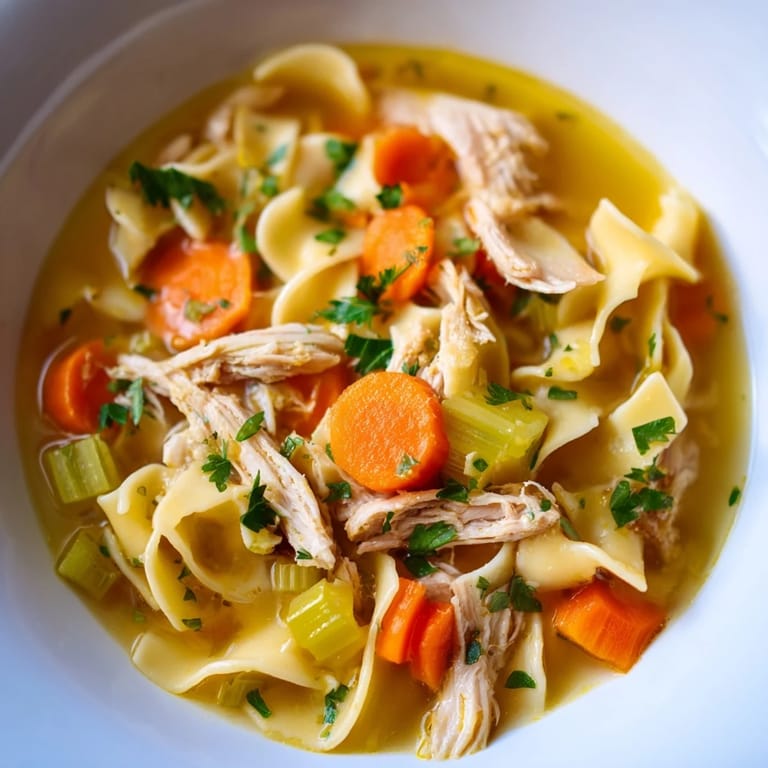
Save There's something about the smell of chicken simmering with carrots and celery that instantly transports me back to my grandmother's kitchen on cold afternoons. She never needed a recipe for chicken noodle soup, just intuition and whatever was in her pantry. I started making this version years ago when I craved that same comfort but wanted something I could pull together in under an hour. The magic is in keeping it simple, letting each ingredient shine without fussiness.
I made this for my partner last winter when they'd been under the weather, and watching them eat a full bowl without complaint felt like a small victory. That's when I realized this soup isn't just about feeding people, it's about showing up for them with something warm and honest.
Ingredients
- Chicken breasts: Two boneless, skinless ones work beautifully, though thighs add a richer depth if you have them. I've learned the key is cooking them whole so they stay tender and don't get lost in the broth.
- Carrots: Medium-sized ones, peeled and sliced about quarter-inch thick. They'll soften as the soup simmers and release their natural sweetness.
- Celery: Two stalks sliced into thin crescents. This is where much of the soup's aromatic backbone comes from, so don't skip it or rush the initial sauté.
- Yellow onion: One small one, diced finely. This sweetens as it cooks and creates the foundation of flavor before the broth even goes in.
- Garlic: Two cloves, minced. A minute in the hot oil is all it needs before the broth prevents it from burning.
- Chicken broth: Six cups of low-sodium, because you want to taste the chicken and vegetables, not just salt. I keep good broth on hand for moments like this.
- Egg noodles: Two cups of the wide kind, which capture broth beautifully in their ruffled surfaces. They'll soften just slightly but still hold their shape.
- Bay leaf: One whole leaf that perfumes everything without being intrusive. Remove it before serving, though I've eaten around one more than once.
- Dried thyme: Half a teaspoon brings an earthy warmth that makes people ask what your secret is.
- Black pepper: Freshly ground, a quarter teaspoon to start. You can always add more, but you can't take it back.
- Salt: One teaspoon initially, then taste as you go. The beauty of homemade broth is you're in control.
- Fresh parsley: Two tablespoons chopped in, plus extra for garnish. It adds a bright note right at the end that lifts everything.
- Olive oil: Just a tablespoon to start the vegetables gently without overwhelming the delicate flavors.
Tired of Takeout? 🥡
Get 10 meals you can make faster than delivery arrives. Seriously.
One email. No spam. Unsubscribe anytime.
Instructions
- Sauté your base:
- Heat the olive oil in a large pot over medium heat until it shimmers slightly. Add the diced onion, carrot slices, and celery, stirring occasionally for 4 to 5 minutes until everything softens and the onion turns translucent. You'll notice the kitchen filling with that classic soup aroma.
- Bloom the garlic:
- Stir in the minced garlic and let it cook for just about a minute, until it's fragrant and golden but not brown. This brief moment transforms the raw garlic into something mellow and sweet.
- Build the broth:
- Pour in the chicken broth, then add the whole chicken breasts, bay leaf, thyme, salt, and pepper. Bring everything to a gentle boil, then lower the heat and let it simmer uncovered for 15 to 20 minutes until the chicken is cooked through and no longer pink inside.
- Shred and return:
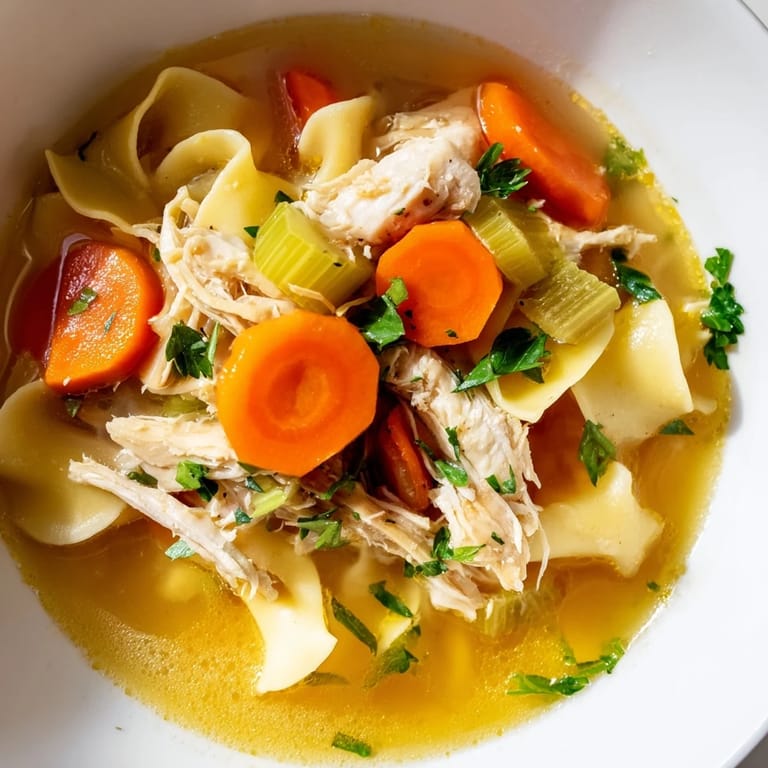
- Carefully remove the cooked chicken with a slotted spoon and place it on a cutting board. Using two forks, shred it into bite-sized pieces, then return it to the simmering broth. This keeps the chicken tender and lets it absorb the flavors.
- Add the noodles:
- Scatter the egg noodles across the surface and stir gently to separate them. Simmer for 7 to 8 minutes until they're tender but still have a slight resistance to the bite. Don't walk away, as this is when the soup comes together most noticeably.
- Season and finish:
- Stir in the fresh parsley and taste everything carefully. Adjust salt and pepper until it tastes exactly how you want it. This is your moment to make it yours.
- Serve with care:
- Remove the bay leaf, ladle the soup into bowls, and garnish with a small handful of extra parsley if you like. The color and fresh taste make a real difference.
 Save
Save My favorite memory of this soup isn't from making it at home, but from teaching my niece how to shred chicken using two forks. She was maybe seven, concentrating so hard her tongue poked out slightly, and the shredded pieces flew everywhere. She declared her version was better than mine, and honestly, she was right.
Why This Soup Feels Like Home
Chicken noodle soup sits at the intersection of effort and ease. It doesn't demand precision or fancy techniques, yet it delivers something infinitely comforting. There's a reason this dish has survived generations of home cooking without needing to prove itself or become trendy. It simply works, and sometimes that's the most elegant thing a recipe can be.
Ways to Make It Your Own
The beauty of this foundation is that it welcomes your additions without losing its identity. I've added a squeeze of fresh lemon juice at the very end, which brightens everything. Other times, I've stirred in a handful of fresh spinach in the last minute, or added a diced potato if I'm feeling like the soup needs more substance. The aromatics of the onion, carrot, and celery stay constant, but you can build from there.
Storage and Reheating Tips
This soup keeps beautifully in the refrigerator for three or four days, and it actually tastes better the next day as the flavors deepen. You can also freeze it in portions for up to two months if you have the space. When reheating, do it gently over medium-low heat so the noodles don't turn mushy, and add a splash of broth or water if it's thickened too much. The parsley garnish is fresh each time, never part of the reheating, so save that for when you're actually serving.
- Let leftovers cool completely before refrigerating to avoid condensation and sogginess.
- Freeze in flat portions so they thaw quickly and take up less space.
- Add a touch of broth when reheating since the noodles absorb liquid over time.
 Save
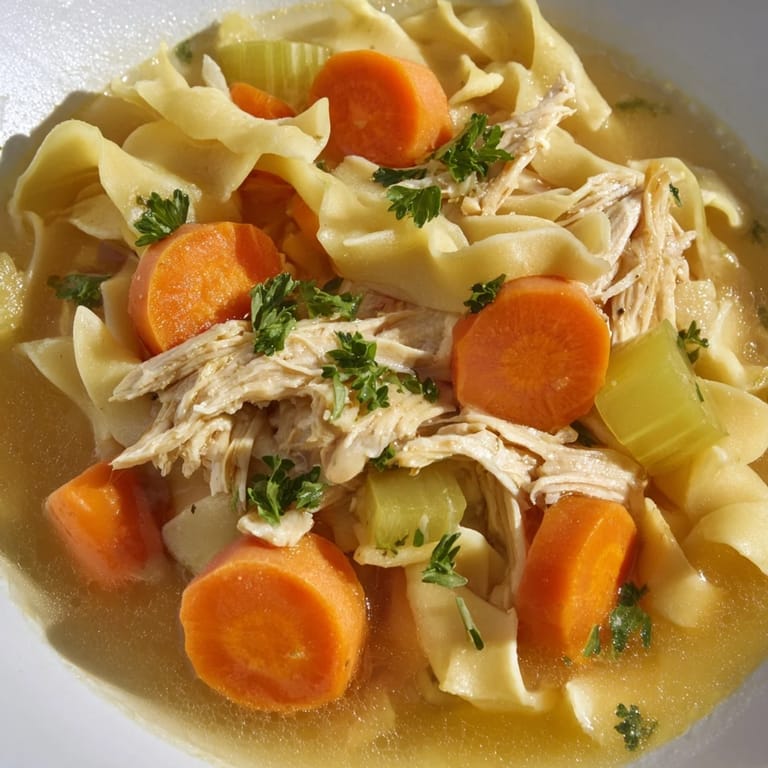
Save This soup asks nothing of you except presence and a little time. Make it when you need comfort, make it for someone who needs it, or make it simply because the ingredients are there and your kitchen is cold. That's more than enough.