 Save
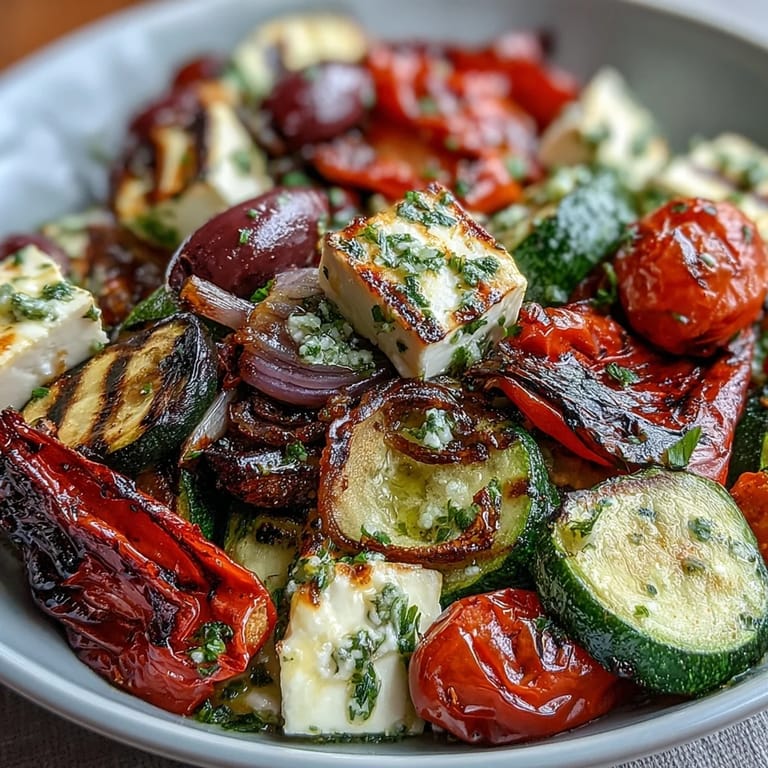
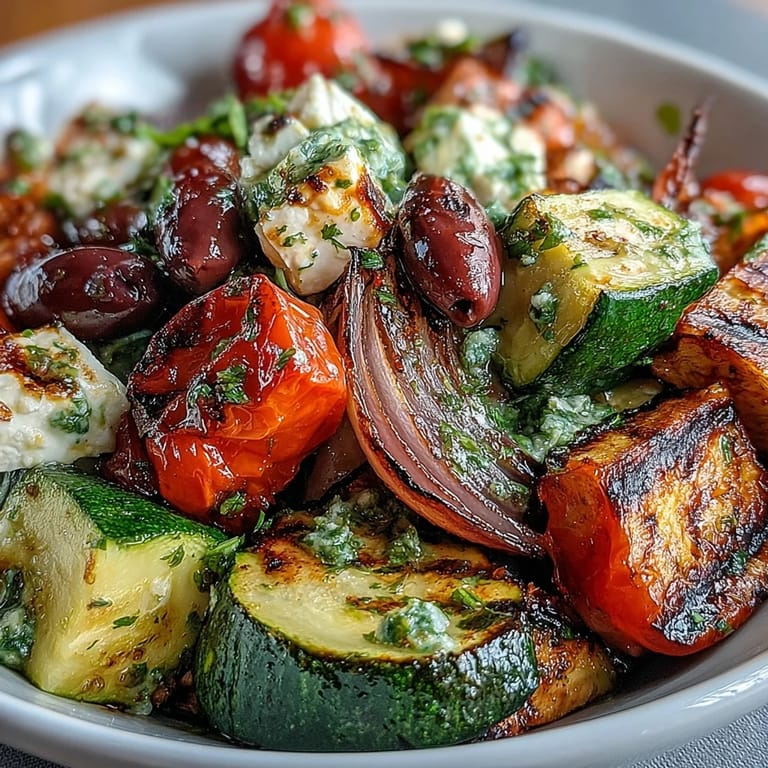
Save There's something magical about the moment you pull a sheet of roasted vegetables from the oven and the kitchen fills with that deep, caramelized aroma—it's nothing like raw salad greens. My first roasted Greek salad happened by accident when I had leftover vegetables and a craving for something warm on a cool evening, and I've never looked back since. The heat brings out sweetness you never knew was hiding in a bell pepper, while the feta gets slightly creamy from the warmth. This isn't your grandmother's Greek salad sitting in a plastic container; it's vibrant, unexpected, and tastes like you actually care.
I served this to my sister last summer when she showed up unannounced on a warm afternoon, and she literally closed her eyes after the first bite and asked if I'd secretly become a chef. That moment taught me that the best meals aren't always the most complicated ones—they're just the ones made with attention and fresh ingredients that matter.
Ingredients
- Red and yellow bell peppers: Cut into generous chunks so they caramelize rather than shrivel, and the color contrast makes the finished dish absolutely stunning.
- Red onion: Wedges hold their shape during roasting and develop a sweetness that balances the other vegetables beautifully.
- Zucchini: Slice thick enough that they don't dry out—thin rounds disappear into nothing in the oven.
- Eggplant: Cut into cubes rather than rounds so they roast evenly and soak up that olive oil flavor.
- Cherry tomatoes: Halve them to prevent bursting and to ensure they get slightly caramelized at the edges.
- Extra-virgin olive oil: Use your good olive oil here—this isn't the time to skimp, as it's a star ingredient, not just cooking fat.
- Cucumber: The raw, cool contrast to warm vegetables is essential, so don't skip this or try to roast it.
- Kalamata olives: Pitted versions save time, but halving them distributes their briny punch throughout every bite.
- Feta cheese: Crumbly or cubed, both work, but let it warm slightly with the vegetables so it becomes creamy rather than harsh.
- Fresh flat-leaf parsley: The final garnish that brings freshness and color after all that roasting.
- Red wine vinegar and fresh lemon juice: The acidity in the dressing cuts through the richness of the oil and warm vegetables.
- Dried oregano: This is the Greek signature—don't substitute with fresh, as dried oregano has a more concentrated, authentic flavor here.
Tired of Takeout? 🥡
Get 10 meals you can make faster than delivery arrives. Seriously.
One email. No spam. Unsubscribe anytime.
Instructions
- Fire up your oven:
- Preheat to 220°C (425°F) and line your baking sheet with parchment paper so cleanup becomes almost a non-issue.
- Cut and arrange your vegetables:
- Toss all the vegetables together with olive oil, salt, and pepper on the sheet, spreading them out so they have room to breathe and caramelize rather than steam.
- Roast until golden:
- After about 15 minutes, give everything a stir so the pieces that were on the bottom get their turn at the heat. You're looking for tender vegetables with slightly browned, caramelized edges—about 25 to 30 minutes total.
- Build your dressing while vegetables roast:
- Whisk together the olive oil, vinegar, lemon juice, oregano, mustard, and garlic in a small bowl until everything emulsifies into a silky mixture. Taste and adjust the salt and pepper to your preference.
- Layer with intention:
- Arrange cucumber slices on your serving platter or bowl first—they'll stay cooler this way and provide a fresh base. Top with the warm roasted vegetables, then scatter olives and feta across the top so every forkful has something to discover.
- Dress and serve:
- Drizzle the dressing over everything and finish with a generous handful of chopped parsley. Toss gently just before eating so the components stay distinct, and serve while the vegetables are still warm.
 Save
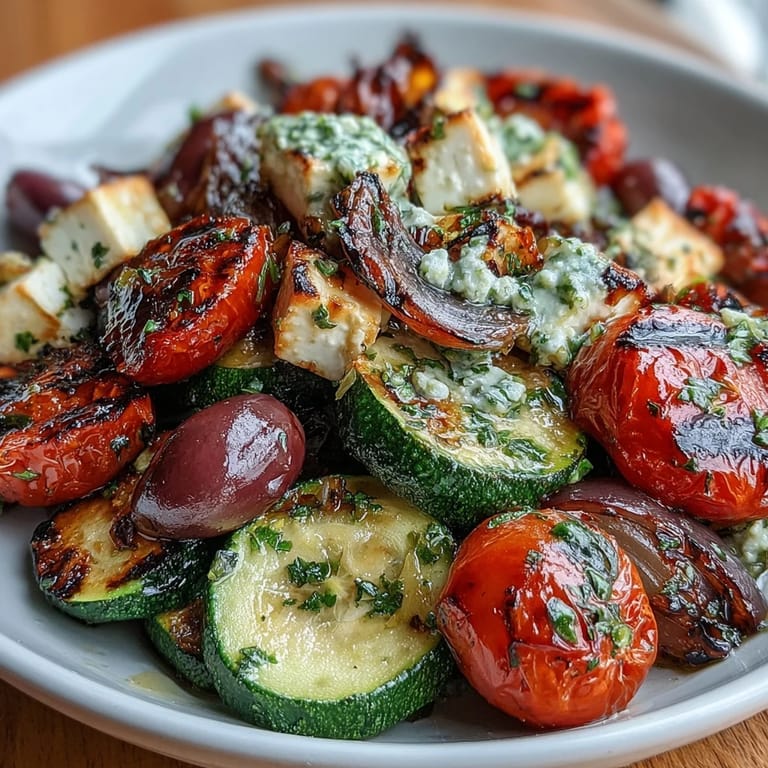
Save This salad became my go-to dish when I realized I could make it ahead and serve it at any temperature, which meant I could actually enjoy cooking and talking with friends instead of rushing back to the kitchen. There's real freedom in that kind of flexibility.
The Roasting Technique That Changes Everything
Roasting isn't just about heat—it's about caramelization, which happens when the natural sugars in vegetables get concentrated and browned. The key is not overcrowding your pan, because if vegetables are touching they steam instead of caramelize, and you lose that crucial depth of flavor. I learned this the hard way by piling everything in one layer and wondering why nothing had any color, so now I give each vegetable the space it deserves and the results are completely different.
Building Better Balance
The combination of warm vegetables, cool cucumber, creamy feta, and tangy dressing creates a salad with real complexity—no single flavor dominates, which is why it stays interesting through every bite. The raw cucumber isn't just a side note; it prevents the dish from feeling heavy and heavy, and provides a textural contrast that keeps you engaged with what you're eating. It's the difference between a salad that satisfies and a salad you forget after you finish the bowl.
Variations That Keep It Fresh
Once you master the basic roasting method, this salad becomes a canvas for whatever vegetables you have on hand or whatever your mood demands. You can swap mushrooms for eggplant, add roasted potatoes to make it heartier, or toss in capers and sun-dried tomatoes for extra intensity. The dressing stays the same, the method stays the same, but suddenly you're creating something slightly different each time.
- Roasted artichoke hearts and roasted potatoes make this into a full meal salad that's perfect for potlucks and picnics.
- A handful of crispy chickpeas adds protein and crunch if you want to make it more substantial without adding meat.
- Serve with warm pita bread or crusty sourdough on the side for dipping in the dressing that pools at the bottom of the bowl.
 Save
Save This salad taught me that sometimes the best way to honor a classic is to respectfully change it, and this warm twist on Greek salad has become the version I crave. Every time I make it, I remember that good cooking is really just about paying attention to the details and trusting that simple ingredients, treated with care, will always shine.
Recipe FAQs
- → Can I serve this salad cold?
While best enjoyed warm or at room temperature, you can refrigerate leftovers and serve cold. The flavors meld beautifully overnight, though the vegetables may soften slightly.
- → What vegetables work best for roasting?
Bell peppers, red onion, zucchini, eggplant, and cherry tomatoes are ideal as they roast evenly and develop sweet, caramelized flavors. Feel free to add mushrooms or swap eggplant for other vegetables.
- → Can I make this vegan?
Yes, simply omit the feta cheese or substitute with a vegan feta alternative. The roasted vegetables and zesty dressing provide plenty of flavor on their own.
- → How long does this salad keep?
Store in an airtight container in the refrigerator for up to 3 days. For best results, keep the dressing separate and toss just before serving to maintain texture.
- → What should I serve with this?
Grilled pita bread, crusty bread, or quinoa pair wonderfully. It also complements grilled fish, chicken, or lamb for a complete Mediterranean meal.
- → Can I prepare vegetables ahead?
You can chop vegetables up to a day in advance and store them in the refrigerator. Roast just before serving for the best texture and flavor.