 Save
Save My aunt's kitchen smelled like simmering tomatoes and melted cheese for what felt like the entire autumn of 1998, and I finally understood why when she let me help build my first lasagna from scratch. There's something almost meditative about layering pasta sheets, watching the ricotta spread smooth across them, then knowing that in less than two hours, all those separate components would fuse into something warm and impossibly comforting. That dish taught me that sometimes the best meals aren't about fancy techniques or exotic ingredients—they're about understanding how simple things work together, and showing up for the people you're feeding.
I made this for my college roommate's birthday dinner one February, and she cried—not because it was fancy, but because it was the first homecooked meal anyone had made her since she'd moved away from her family. That's when I realized lasagna isn't just food; it's a way of saying you cared enough to spend an afternoon in the kitchen for someone else. Every time I layer it now, I think about that moment.
Ingredients
- Lasagna noodles (12 sheets, uncooked): Using them dry means they won't stick or fall apart, and they'll absorb moisture perfectly from the sauce as everything bakes—no pre-boiling needed, which saves time and dishes.
- Ricotta cheese (15 oz): This is your creamy layer, and it needs an egg to hold it together; without it, the mixture can be watery and won't create those distinct stripes of flavor.
- Mozzarella cheese (4 cups, shredded): Buy whole milk mozzarella if you can find it—it melts silkier than part-skim, though part-skim works fine if that's what you have.
- Parmesan cheese (1 cup, grated): This goes on top for that golden, crispy finish and adds a sharp contrast to the sweet marinara.
- Ground beef (1 lb, lean): Lean ground beef means less grease to drain and a cleaner sauce, but regular ground beef works—just be ready to spoon off fat after browning.
- Italian sausage (1 lb, casing removed): The sausage brings fennel and herbal notes that ground beef alone can't; if you only have beef, add a teaspoon of fennel seeds to compensate.
- Marinara sauce (4 cups): Homemade is wonderful if you have time, but good quality store-bought is honest and saves an hour of simmering—choose one with minimal added sugar.
- Garlic (4 cloves, minced): Mince it fresh rather than using jarred; the flavor matters more here since the sauce only simmers briefly.
- Olive oil (2 tablespoons): Just enough to coat the pan and help the garlic release its fragrance without the meat cooking in too much fat.
- Fresh basil (¼ cup, chopped): Add it at the end of the sauce so it stays bright and herbaceous rather than turning dark and bitter from prolonged heat.
- Salt and black pepper: Taste as you go; the cheeses add saltiness too, so you might use less than you think.
Tired of Takeout? 🥡
Get 10 meals you can make faster than delivery arrives. Seriously.
One email. No spam. Unsubscribe anytime.
Instructions
- Heat the oven and start your sauce:
- Get your oven to 375°F so it's ready when you are, then warm olive oil in a large skillet over medium heat. The kitchen will smell like cooking is happening, and that's when you add minced garlic—listen for the little sizzle.
- Brown the meat properly:
- Add ground beef and sausage, breaking it apart with a wooden spoon as it cooks, about 8 to 10 minutes total. You want it evenly browned with no pink spots, then drain off the excess fat by tipping the skillet slightly and pressing the meat against the side with your spoon.
- Build flavor in the sauce:
- Stir in marinara sauce, salt, pepper, and basil, then let it simmer gently for 10 minutes. The flavors meld quietly, and you'll see the sauce darken slightly from the meat and herbs blending together.
- Prepare the ricotta layer:
- While the sauce simmers, combine ricotta cheese and one large egg in a mixing bowl, stirring until completely smooth. This binds everything and creates pockets of creamy richness between the pasta.
- Assemble the first layer:
- Spread a thin layer of meat sauce across the bottom of a 9x13 inch baking dish, then lay 4 lasagna sheets across it, overlapping slightly where they meet. The sauce keeps them from sticking later as they hydrate during baking.
- Build your second layer:
- Spread half of the ricotta mixture evenly over the noodles, then sprinkle a third of the mozzarella on top, followed by more meat sauce. You're creating a rhythm here—sauce, pasta, cheese, sauce.
- Create the middle layer:
- Repeat with another layer of 4 noodles, the remaining ricotta, another third of mozzarella, and more meat sauce. The lasagna is taking shape, and you can feel the weight of it building.
- Finish with the top layer:
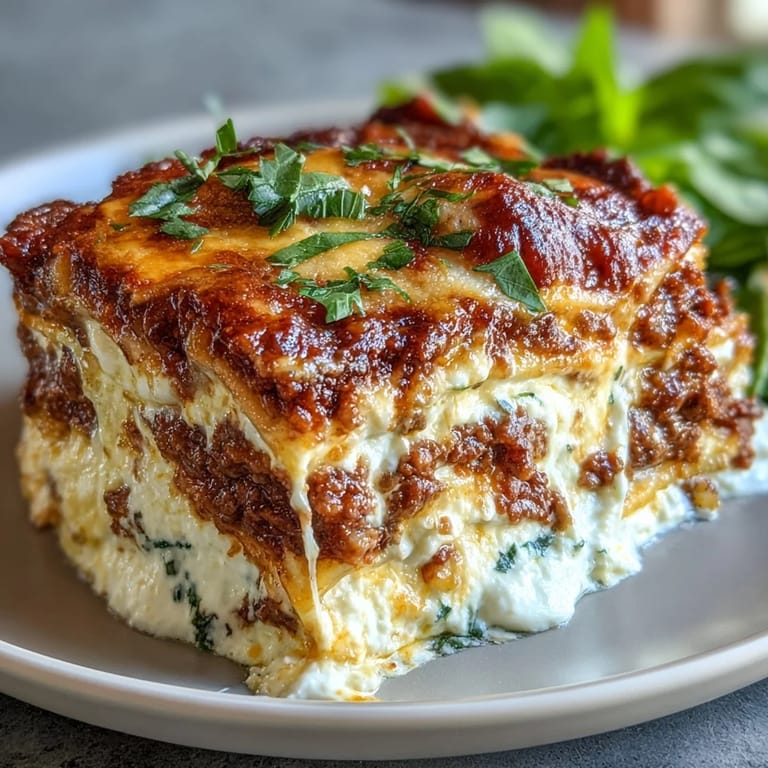
- Place the final 4 noodles across the dish, cover with the remaining meat sauce, then top with the last of the mozzarella and all the Parmesan. This top layer will brown and crisp beautifully.
- First bake with foil protection:
- Cover the baking dish tightly with aluminum foil and bake for 25 minutes at 375°F. The foil traps steam so the noodles soften through and the cheese doesn't brown too fast.
- Finish uncovered:
- Remove the foil and bake for another 15 minutes until the cheese is golden and bubbling at the edges. You'll know it's done when it smells like caramelized cheese and looks absolutely irresistible.
- Rest before serving:
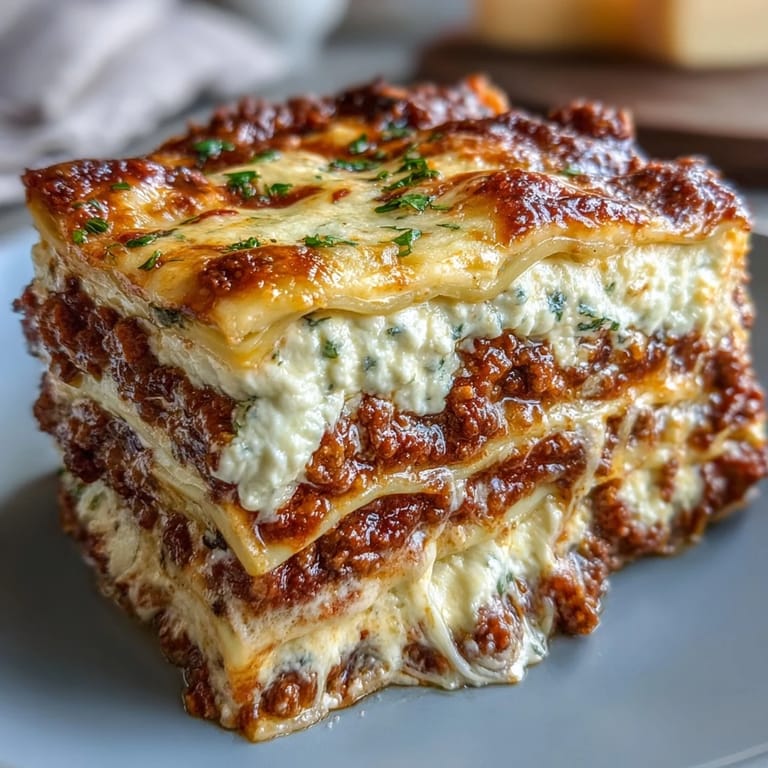
- Let the lasagna sit on the counter for at least 15 minutes—this seems like torture, but the layers set up so each slice stays together instead of sliding apart on the plate.
 Save
Save One winter evening, I watched my teenage nephew eat three big slices of this lasagna without looking up from his plate, then ask if he could take another piece home. He wasn't being polite—he was genuinely hungry and satisfied in a way that felt like the whole point of cooking. That's when you know you've made something right.
The Sausage-to-Beef Ratio Matters
Using equal parts ground beef and Italian sausage creates a more interesting flavor than either one alone, because the sausage brings fennel, garlic, and subtle spice that transform the whole sauce. The beef adds bulk and helps absorb flavors without overwhelming them, so together they create something greater. If you prefer a lighter dish, you can use 1.5 lbs beef and 0.5 lbs sausage, though you'll lose some of that complexity.
Why Resting Matters More Than You Think
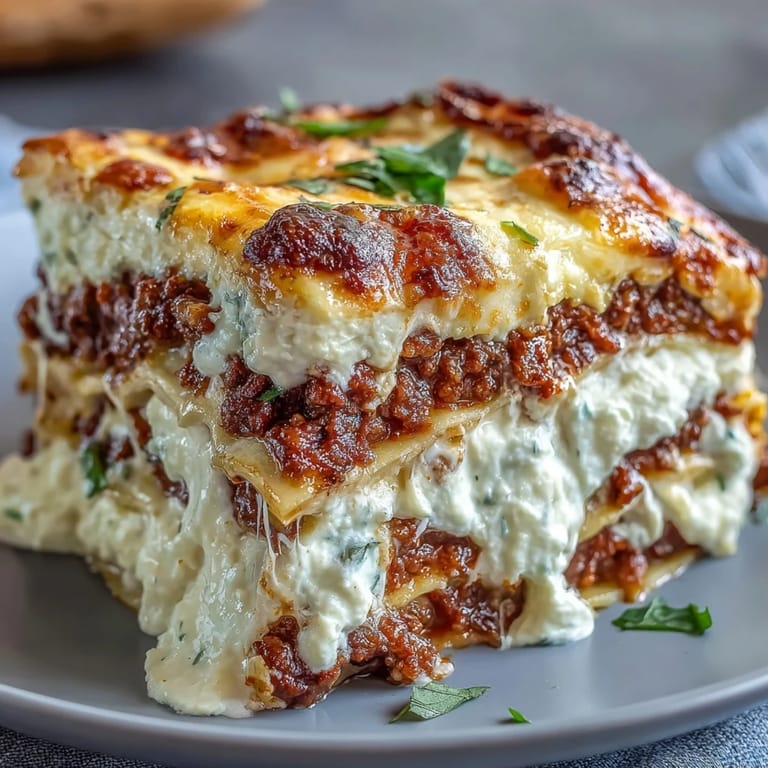
The 15-minute rest isn't just about convenience—it's actually structural. The layers need time to set firm so that when you cut into them, each layer stays defined and the cheese doesn't ooze everywhere. If you slice too early, the layers are still soft and the heat is still redistributing through the dish, which means your carefully built structure falls apart. My Italian grandmother once told me that patience is the real secret ingredient in lasagna.
Make-Ahead and Storage Secrets
You can assemble this lasagna in the morning and refrigerate it until dinner, then bake it straight from the cold—just add 5 to 10 minutes to the initial covered bake since you're starting from a colder temperature. Leftovers actually improve on the second day as the flavors continue melding, and they reheat beautifully either in a 350°F oven for 20 minutes or in the microwave for individual portions.
- Freeze assembled (unbaked) lasagna for up to 2 months, or freeze baked portions in containers for quick meals on nights when cooking feels impossible.
- When freezing baked lasagna, cut it into individual squares first so you can thaw and reheat just what you need without defrosting the whole pan.
- Avoid refreezing after thawing; once it's thawed, it keeps in the refrigerator for 3 to 4 days.
 Save
Save This lasagna becomes the meal you make when you want to say something without words, when you want to fill a table with people you care about and send them home full. Make it with confidence, knowing that the work is honest and the result is always worth it.
Recipe FAQs
- → Why must I let the lasagna rest before serving?
Resting for 15 minutes allows the layers to set, ensuring clean slices and preventing the cheese and sauce from running when cut. This step is essential for presentation and easier serving.
- → Can I use no-boil noodles instead?
Yes, no-boil noodles work well and may require slightly less sauce since they absorb less moisture. Adjust sauce quantity accordingly and follow package instructions for best results.
- → How do I know when the lasagna is done?
The lasagna is ready when the cheese is golden and bubbly, and the noodles are tender when pierced with a knife. The internal temperature should reach 160°F for food safety.
- → Can I assemble this ahead of time?
Absolutely. Assemble the dish, cover tightly, and refrigerate up to 24 hours before baking. Add 10-15 minutes to the covered baking time if baking cold from the refrigerator.
- → What works well as a side dish?
A crisp green salad with vinaigrette, garlic bread, or roasted vegetables complement the rich flavors. A glass of Chianti or another Italian red wine pairs beautifully.
- → How long do leftovers keep?
Store covered in the refrigerator for 4-5 days. Individual portions freeze well for up to 2 months. Reheat covered at 350°F until hot throughout.