 Save
Save I remember the first time I held a butternut squash because it looked like a giant bowling pin. My hands were sore from the prep work but the smell of the roasting vegetables made me forget everything. This soup is like a warm hug on a cold afternoon. It has become my favorite way to handle rainy days when I just want to stay inside. The deep orange color always brightens up my kitchen.
Last year I made a double batch of this when my sister came over after a long moving day. We sat on the floor among boxes while the wind rattled the windowpane. There is something about the cinnamon and nutmeg that makes a house feel like a home. I watched her take that first sip and saw her entire posture relax. It remains the most requested meal whenever my family gathers for a quiet night.
Ingredients
- Butternut Squash: Roasting this first is the only way to get that intense caramelized depth that boiling cannot provide.
- Yellow Onion: This provides the savory backbone that prevents the soup from tasting too much like a dessert.
- Garlic: I like to mince mine very finely so it melts into the base without any sharp bites.
- Vegetable Broth: Use a high quality broth because it carries the spices throughout every single spoonful.
- Coconut Milk or Heavy Cream: This creates that luxurious velvety mouthfeel that makes the soup feel special.
- Maple Syrup: A little goes a long way in highlighting the natural sugars of the roasted vegetable.
- Nutmeg and Cinnamon: These warm spices bridge the gap between savory and sweet perfectly.
- Olive Oil: A drizzle before roasting helps the squash cubes brown evenly in the oven.
Tired of Takeout? 🥡
Get 10 meals you can make faster than delivery arrives. Seriously.
One email. No spam. Unsubscribe anytime.
Instructions
- Roast the squash:
- Toss the cubes with oil and salt on a tray then bake at 200C until the edges are golden. This step develops the sugars and makes the texture much richer.
- Build the base:
- Saute your onions in a large pot until they are clear before adding the garlic for a quick minute. You want the onions to be soft and sweet for the best flavor.
- Combine and simmer:
- Add your roasted gold to the pot with the broth and spices to let the flavors get to know each other. Keep the heat low so the broth does not evaporate too quickly.
- Smooth it out:
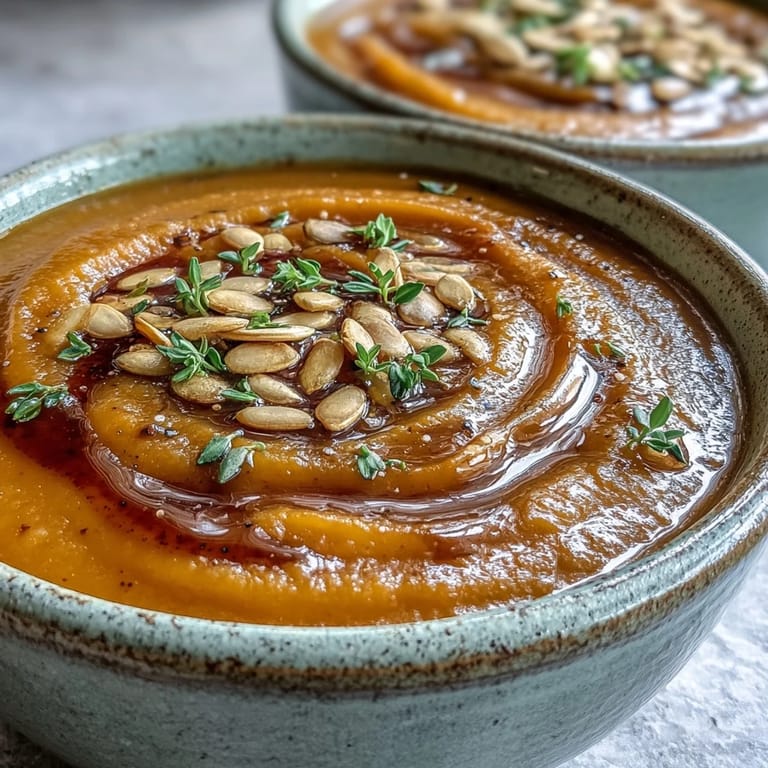
- Use an immersion blender to swirl everything into a thick creamy consistency without any lumps. It should look like a bright orange velvet sea when you are finished.
- Finish with cream:
- Stir in your coconut milk or cream and give it a final taste to see if it needs salt. The cream adds a beautiful sheen to the final dish.
- Serve and garnish:
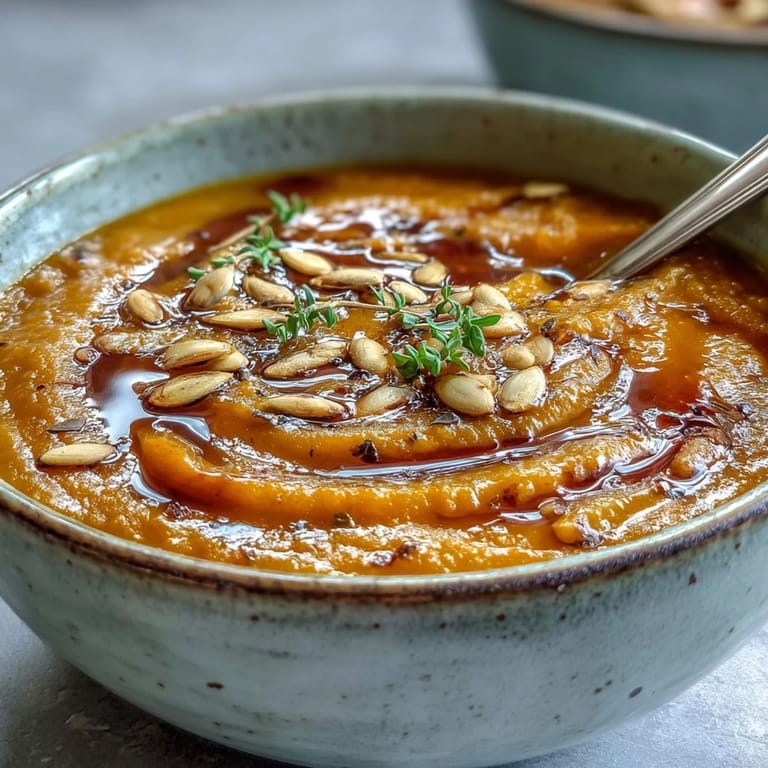
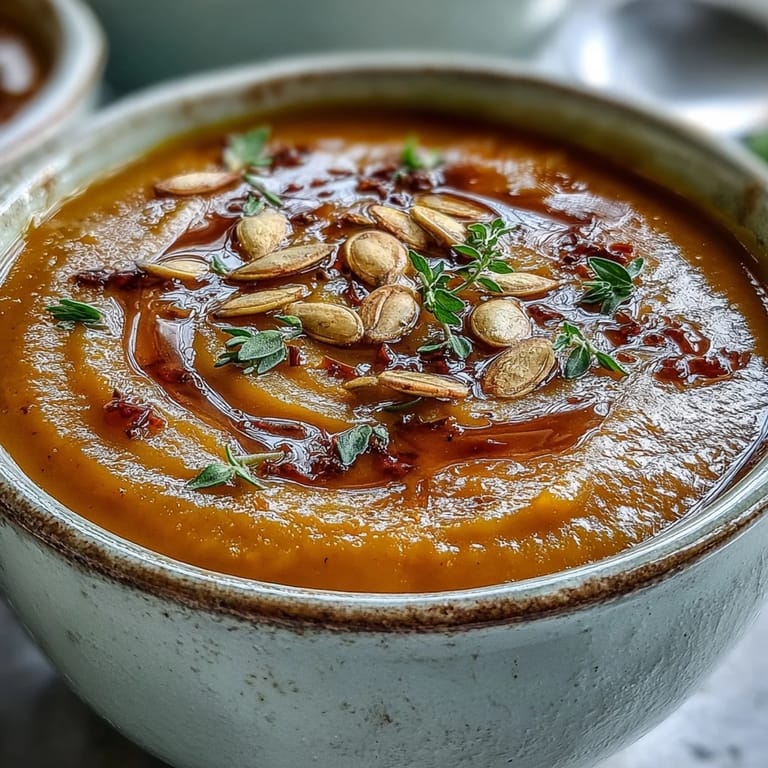
- Ladle the soup into bowls and top with crunchy pumpkin seeds and a tiny swirl of maple syrup. The crunch of the seeds is the perfect contrast to the smooth soup.
 Save
Save One evening I accidentally added a pinch of cayenne pepper while reaching for the cinnamon and it was a revelation. The tiny bit of heat against the creamy sweetness was exactly what the recipe had been missing. My friends still talk about that spicy version even though it started as a total mistake. It taught me that sometimes the best improvements happen when you stop being so careful. Now I always keep a little spice jar nearby just in case I feel bold.
The Art of the Blend
Getting that perfect texture is really about patience with your blender. If you use a countertop version be careful not to fill it too high or the steam might pop the lid. I prefer the immersion blender because I can see the soup transform into a velvet sea right in the pot. It is incredibly satisfying to watch the chunky vegetables disappear. Just keep the blade submerged to avoid any messy kitchen splatters.
Choosing Your Squash
When I am at the market I look for a squash that feels heavy for its size with a matte skin. A shiny coat can sometimes mean it was picked too early and wont be as sweet. I usually grab the largest one I can find because the leftovers are even better the next day. Peel it with a sharp y peeler to save your hands from a struggle. The prep work is the hardest part but the reward is a week of easy lunches.
Serving Suggestions
This soup loves a bit of texture on top to contrast with its silky smooth body. I always keep a bag of pumpkin seeds in the pantry specifically for this meal. A side of crusty sourdough bread is practically mandatory for swiping up every last drop from the bowl. You can also experiment with different garnishes depending on your mood or what is in the fridge.
- Try a swirl of basil pesto for a bright green pop of flavor.
- Add a few croutons toasted in butter for a satisfying crunch.
- Keep the herb leaves whole for a beautiful presentation.
 Save
Save I hope this soup brings as much warmth and comfort to your kitchen as it has to mine. Happy cooking and enjoy every spoonful of this autumn harvest.
Recipe FAQs
- → Can I make this soup ahead of time?
Absolutely. This soup actually tastes better the next day as flavors have time to meld. Store in an airtight container in the refrigerator for up to 4 days. Reheat gently over low heat, adding a splash of broth or milk if needed to reach desired consistency.
- → Is roasting the squash necessary?
While you could simmer raw squash directly in broth, roasting first creates superior flavor. The high heat caramelizes natural sugars, adding sweetness and depth that boiling alone cannot achieve. This extra step transforms an ordinary soup into something exceptional.
- → Can I freeze this soup?
Yes, freeze cooled soup in freezer-safe containers for up to 3 months. Thaw overnight in the refrigerator before reheating. Note that texture may change slightly upon thawing—simply whisk or blend again to restore creaminess.
- → What can I substitute for coconut milk?
Heavy cream creates an even richer version, while half-and-half offers a lighter alternative. For dairy-free options, try cashew cream or additional blended squash. Each substitution yields slightly different flavors and textures.
- → How do I adjust the sweetness?
Start with less maple syrup—about 1 tablespoon—then taste after blending. Add more gradually until reaching desired sweetness level. Remember that roasting naturally enhances sweetness, so you may need less syrup than expected.
- → What garnishes work best?
Toasted pumpkin seeds add delightful crunch, while fresh thyme provides herbal contrast. A final drizzle of maple syrup enhances the sweet notes. Crispy pancetta, sour cream swirls, or crusty bread on the side also make excellent additions.